5 Soft Skills Professional Should Master in 2026
Research for post done by an NGJ Volunteer Elizabeth Jacob
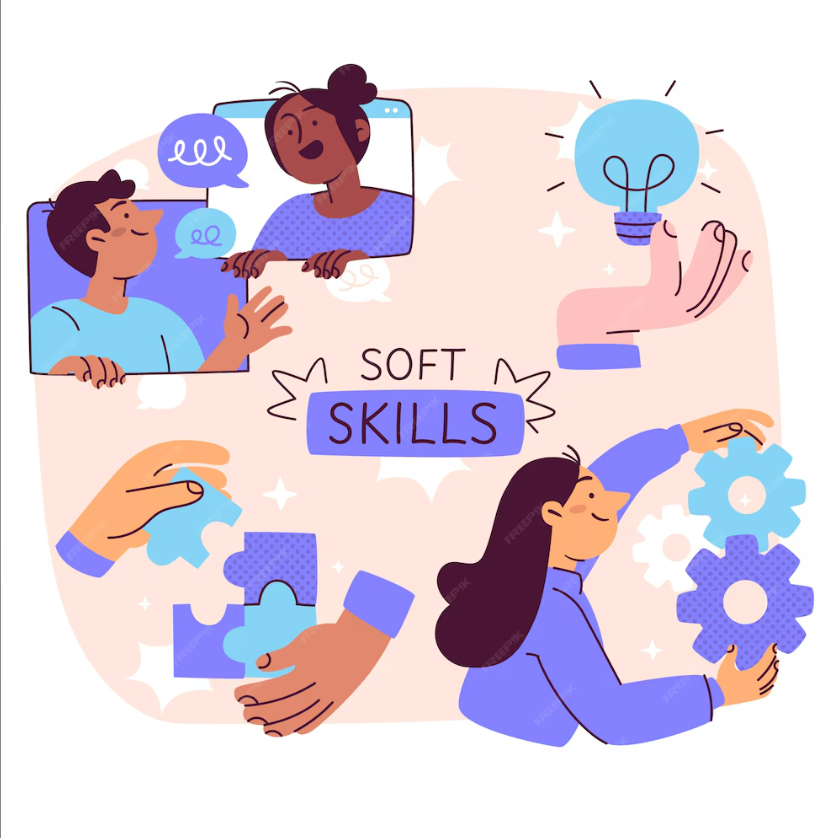
In an era of rapid technological advancement, globalization, and hybrid work environments, the importance of soft skills has never been greater. While technical competencies remain essential, it is the human-centered capabilities such as clear communication, self-awareness, learning agility, analytical thinking, and ethical leadership that distinguish professionals who thrive and organizations that prosper.
Recognizing this, numerous authoritative bodies, including the World Economic Forum, emphasize the value of these skills in shaping resilient, inclusive, and high-performing workplaces. This article explores five essential soft skills that every professional should cultivate in 2026, offering evidence-based rationale, practical strategies for development, and suggestions for measurement and continuous improvement.
Communication: Clear, Concise, and Context Adaptive
Why it Matters
Effective communication is the foundation of organizational alignment and productivity. As remote and hybrid work become the norm, the risks associated with ambiguous or delayed communication are amplified. Employers consistently highlight strong verbal and written communication as the single most requested competency.
How to Practice
Each evening, craft a 150-word summary of the day’s top three priorities and share it with a peer or mentor for feedback to strengthen your communication skills.
Record a three-minute video update on a project or goal each week and request one piece of constructive feedback.
Track the number of meetings requiring follow-up clarification and aim for measurable reduction over time.
Where to Learn
Short courses on business writing and remote communication through platforms such as LinkedIn Learning.
Emotional Intelligence: Self-Awareness, Empathy, and Relationship Management
Why it Matters
Emotional intelligence (EI) is strongly associated with leadership effectiveness, adaptability during change, and the development of psychologically safe work environments. In a time of organizational flux, professionals who understand and manage emotions, both their own and others’, become anchors of stability and collaboration.
How to Practice
Dedicate five minutes each day to journaling: note one positive interpersonal interaction and one missed emotional cue to help build your emotional intelligence.
In three conversations each week, practice active listening by paraphrasing the speaker’s point before offering your own.
Monitor progress through team surveys or peer feedback on relational strengths as part of your ongoing professional development.
Where to Learn
Executive education programs and leadership briefings from institutions such as Harvard Business School.
Adaptability and Learning Agility
Why it Matters
In a world where skill requirements shift rapidly, the ability to learn and relearn becomes a strategic differentiator and a core part of ongoing professional development. The World Economic Forum reports that a significant portion of core workplace skills will change by 2027, making learning agility essential.
How to Practice
Launch a 90-day learning sprint by selecting and engaging with one new micro-skill or tool each quarter to strengthen your adaptability.
Spend 20 minutes daily on a “learning burst” focused on unfamiliar topics or tools instead of infrequent large sessions.
Track progress by counting completed projects that demonstrate new skills rather than just certificates earned, supporting ongoing professional development.
Where to Learn
Review the LinkedIn Workplace Learning Report and take micro-courses on adjacent disciplines, such as foundational AI workflows for non-technical professionals.
Critical Thinking and Problem Solving
Why it Matters
As data, automation, and artificial intelligence become widespread, the ability to define the right questions, identify bias, and interpret information under uncertainty is vital. Employees who apply critical thinking effectively bridge the gap between data and action, making it one of the most important soft skills for modern professionals.
How to Practice
Apply the “5 Whys” technique to one problem each week to uncover root causes and enhance your critical thinking.
Identify assumptions underlying a decision and test one weekly to strengthen this essential soft skill.
Measure effectiveness by tracking reductions in reworked decisions or improvements in decision-making speed as part of ongoing professional development.
Where to Learn
Explore HBR articles on decision-making and reasoning, and short courses in analytics for professionals.
Leadership and Social Influence
Why it Matters
Leadership is no longer confined to managers. Any professional who collaborates across teams or drives change exercises leadership skills, a critical component of broader soft skills. The Future of Jobs report lists “leadership and social influence” among the most sought-after attributes, and organizational trust and ethical leadership are increasingly valued.
How to Practice
Lead a short cross-functional project lasting four to six weeks with clear, measurable outcomes to strengthen your leadership skills.
Provide developmental feedback monthly using the “Situation → Behavior → Impact” framework as part of ongoing professional development.
Measure results through 360-degree feedback focused on trust, clarity, and ability to inspire others.
Where to Learn
Leadership modules from Harvard Business School, McKinsey leadership briefs, and literature on ethical leadership.
Integrating Leadership Skills: A 30-Day Launch Plan
Week 1 (Baseline): Choose one of the five soft skills, create a short journal entry or video reflection, and request feedback from a colleague.
Week 2 (Practice): Engage in daily 10–20-minute exercises for your chosen skill and enroll in a short online course to support your professional development.
Week 3 (Apply): Put the skill into action in a real-world task, such as leading a meeting or analyzing a project issue.
Week 4 (Reflect): Review your feedback and metrics, note strengths and areas for improvement, and plan your next 90 days of growth.
As the professional landscape continues to evolve, these five soft skills will form the foundation for personal effectiveness, collaboration, leadership, and resilience. By intentionally strengthening communication, emotional intelligence, adaptability, critical thinking, and leadership skills, professionals can not only advance their own careers but also contribute meaningfully to the mission, culture, and impact of their organizations.
Resources:
Axios. “Communication: The Most In-Demand Job Skill According to LinkedIn.” February 8, 2024. Retrieved from https://www.axios.com/2024/02/08/communication-most-in-demand-job-skill-linkedin
Financial Times. “Trust and Character in Leadership.” 2025. Retrieved from https://www.ft.com/content/e8023ccc-e64b-4b0f-a0ad-7bf87827525e
Harvard Business Review. “Soft Skills Matter Now More Than Ever, According to New Research.” August 2025. Retrieved from https://hbr.org/2025/08/soft-skills-matter-now-more-than-ever-according-to-new-research
LinkedIn Learning. Workplace Learning Report 2025. Retrieved from https://learning.linkedin.com/content/dam/me/learning/en-us/images/lls-workplace-learning-report/2025/full-page/pdfs/LinkedIn-Workplace-Learning-Report-2025.pdf
McKinsey & Company. “Superagency in the Workplace: Empowering People to Unlock AI’s Full Potential at Work.” January 2025. Retrieved from https://www.mckinsey.com/capabilities/tech-and-ai/our-insights/superagency-in-the-workplace-empowering-people-to-unlock-ais-full-potential-at-work
World Economic Forum. The Future of Jobs Report 2025. Retrieved from https://www.weforum.org/publications/the-future-of-jobs-report-2025