The Intersection of Mental Health and Criminal Law in Atlanta’s Jails
Research for post done by an NGJ volunteer Elizabeth Jacob
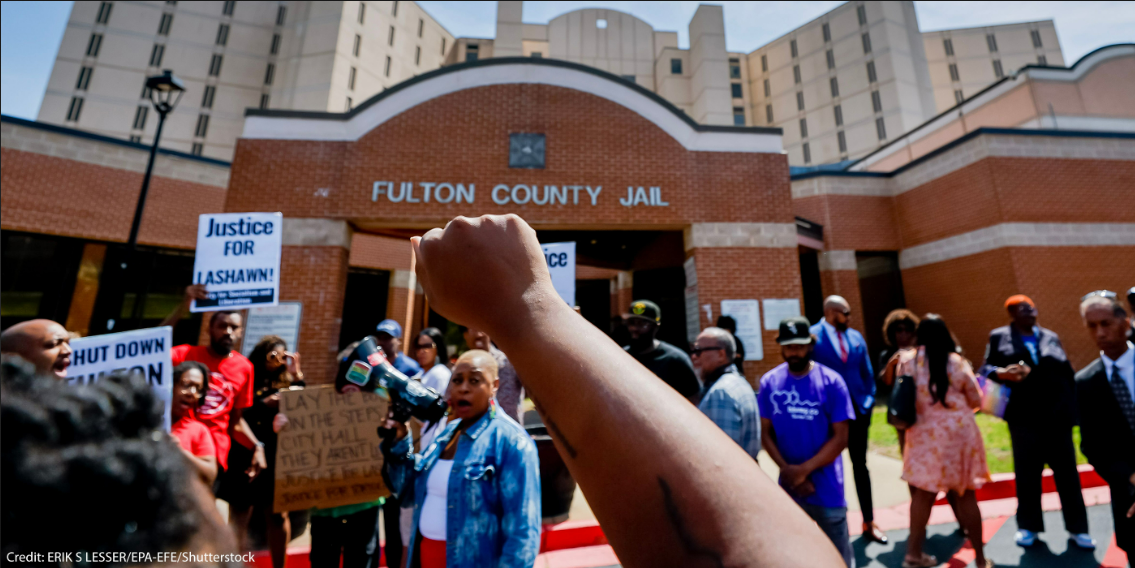
A crisis in plain sight
In recent years the Fulton County Jail has become a focal point for national concern about how jails handle people with serious mental illness. A Department of Justice civil rights investigation documented multiple, systemic failures in the jail that placed detainees at substantial risk of serious harm, including unsanitary conditions, violence, and preventable deaths. These findings followed a string of deaths and incidents that drew federal scrutiny and public outrage.
Local reporting and independent monitoring have reinforced those conclusions, pointing to persistent staffing shortages, unsafe physical conditions, and gaps in medical and mental health care that make it difficult for staff to supervise and protect people in custody.
How Mental Health Intersects With Criminal Law in Practice
Many people in jails are there for low-level offenses related to untreated mental illness, substance use, or homelessness rather than serious violent crimes. Jails are often used by default as places to hold people in crisis, which turns public health problems into criminal justice problems. That mismatch produces serious harms: untreated psychiatric symptoms, worsened trauma, higher risk of suicide and assault, and repeat arrests after release. The Fulton County Justice and Mental Health Task Force, along with county behavioral health programs, frames diversion and deflection as key alternatives to arrest and incarceration for people in crisis.
The death of Lashawn Thompson, who died alone in a filthy mental health unit cell, became emblematic of how failures in care, supervision, and facility conditions can have fatal consequences for detained people with mental illness. The DOJ report cites that incident and others in concluding that constitutional rights were violated.
Immediate Challenges Inside Fulton County Facilities
Understaffing and unsafe conditions: Independent reports and local outlets have warned that staffing shortages and deteriorating facility conditions create environments where violence, assaults, and neglect are more likely. Those conditions hamper any effort to provide appropriate mental health care within the Fulton County Jail system.
Medical and mental health care gaps: The DOJ investigation found patterns of inadequate care, including failure to protect people from harm and failure to provide timely mental health treatment. Contracting of health services to third parties has drawn criticism when oversight is weak.
High prevalence of behavioral health needs: Many detainees arrive with serious mental illness, substance use disorders, or co-occurring conditions and require timely screening, de-escalation, and continuity of care—services that jail settings are not always designed to deliver.
Diversion, Deflection, and Treatment Initiatives Underway
Despite the bleak picture, Atlanta and Fulton County are implementing several promising alternatives to traditional incarceration that prioritize care over custody.
Center for Diversion and Services: This new center provides law enforcement and first responders with an alternative to arrest for people in behavioral health crises. The center operates 24/7 and connects people to immediate support, including peer services, case management, hygiene needs, and linkage to treatment, with the goal of avoiding unnecessary stays in the jail or emergency rooms.
Justice and Mental Health Task Force: The Fulton County task force brings together the courts, behavioral health providers, law enforcement, advocates, and community members to design data-driven action plans for deflection, diversion, and treatment pathways at multiple points in the justice system. These efforts emphasize screening, crisis response, and community-based services that can reduce the number of people with serious mental illness who are booked into custody.
Consent Decree and Federal Oversight: After the DOJ findings, Fulton County entered a consent decree to address identified constitutional violations. The decree creates an enforceable structure for remediation, independent monitoring, and public reporting to ensure that the county improves safety, staffing, sanitation, and medical and mental health care inside the jail. That federal oversight can accelerate reforms but will require sustained funding and political will.
On-the-ground Service Changes: County leaders have proposed facility renovations and specialized mental health units, while advocates press for investments in community care and diversion rather than new jail construction. At the same time, expansion of mobile crisis units, extended-hours behavioral health services, and coordination with community organizations are being used to bridge gaps in care outside jail walls.
What Needs to Happen Next
Based on current evidence and best practices, three priorities stand out:
Scale diversion and crisis-response alternatives: Investing in centers, mobile crisis units, and co-responder teams gives police options to connect people with care instead of arrest. Evidence shows that such programs reduce arrests, repeat encounters, and costs.
Strengthen jail-based mental health care while reducing reliance on incarceration: For those who remain in custody, immediate improvements in staffing, clinical oversight, medication continuity, and humane conditions are essential. The consent decree and independent monitoring must be followed by concrete resource commitments.
Invest in community treatment capacity and housing: Many justice-involved people lack stable housing or community-based treatment. Expanding outpatient mental health services, supported housing, and substance use treatment can prevent crisis calls and reduce jail admissions in the first place.
The Fulton County Jail is a test case for how U.S. criminal justice systems handle mental illness. The DOJ findings make clear that current practices leave people exposed to unacceptable risks, while local diversion efforts point toward alternatives that center on health and dignity. A durable solution will require coordinated investment in community care, rigorous oversight inside facilities, and policies that stop treating public health needs as primarily a law enforcement problem. Community members can help by supporting local diversion programs, urging policymakers to fund mental health and housing services, and demanding transparency as reforms move forward.
Resources:
Atlanta News First. Judge appoints monitor to oversee agreement to reform Georgia’s Fulton County Jail. February 21 2025. Retrieved from https://www.atlantanewsfirst.com/2025/02/21/judge-appoints-monitor-oversee-agreement-reform-georgias-fulton-county-jail/
City of Atlanta / Fulton County strategic partnership announcement. City of Atlanta and Fulton County Announce Strategic Partnership. November 5 2021. Retrieved from https://www.fultoncountyga.gov/news/2021/11/05/city-of-atlanta-and-fulton-county-announce-strategic-partnership
Fulton County Government, Behavioral Health and Developmental Disabilities. Court Related Mental Health. Retrieved from https://www.fultoncountyga.gov/inside-fulton-county/fulton-county-departments/behavioral-health-and-developmental-disabilities/court-related-mental-health
Fulton County Superior Court. Center for Diversion and Services. Retrieved from https://www.fultonsuperiorcourtga.gov/center-for-diversion-and-services
Fulton County Superior Court. Fulton County Justice & Mental Health Task Force. Retrieved from https://www.fultonsuperiorcourtga.gov/fulton-county-justice-and-mental-health-task-force
Policing Alternatives & Diversion Initiative (PAD Atlanta). Diversion Center. Retrieved from https://www.atlantapad.org/diversion-center
Sch R (Southern Center for Human Rights). DOJ Report Exposes Brutality in Fulton County Jail, Leading to Consent Decree and Community Action. [Date unspecified]. Retrieved from https://www.schr.org/doj-report-exposes-brutality-in-fulton-county-jail-leading-to-consent-decree-and-community-action/schr.org
U.S. Department of Justice, Civil Rights Division & U.S. Attorney’s Office for the Northern District of Georgia. Investigation of the Fulton County Jail. November 14 2024. Retrieved from https://www.justice.gov/crt/media/1377011/dl
U.S. Department of Justice. Justice Department Finds Conditions at Fulton County Jail in Georgia Violates the Constitution and Federal Law. November 14 2024. Retrieved from https://www.justice.gov/archives/opa/pr/justice-department-finds-conditions-fulton-county-jail-georgia-violate Department of Justice+2Department of Justice+2